
Get into $400 Billions Opprtunity before anyone else in web3
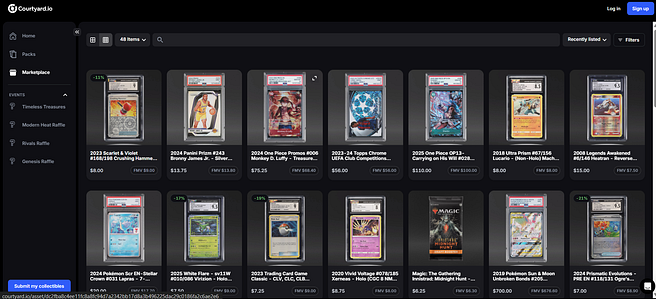
Most founders chasing the RWA narrative are looking at bonds, real estate, and treasury tokenization.
They’re sleeping on trading cards.
Not because cards are trivial, but because the people who’ve already built this are quietly printing money on Polygon while the rest of the multi-chain ecosystem sits empty.
Press enter or click to view image in full size
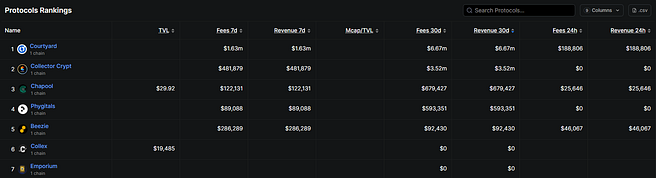
Courtyard.io is doing $1.63M in daily volume.
Collector Crypt clocked $481K.
Phygitals hit $89K.
All of them? One chain each. All predominantly Polygon, base, and Solana.
But Arbitrum doesn’t have this. Avalanche doesn’t have this and there are more than 100+ blockchain live that need this money printer.
But we all know that the product works, the demand is proven and the market is a $400B collectibles industry that’s been waiting for infrastructure.
The only thing missing is founders willing to deploy the same stack on untapped chains and capture the liquidity that’s sitting there with nowhere to go.
This breakdown covers:
What physical TCG tokenization actually is
How the internal architecture works (vault → fingerprint → on-chain proof)
The smart contract mechanics most builders overlook
The right approach to build this on a different chain
What separates protocols that scale from ones that stall
What Physical TCG Tokenization Actually Is?
Press enter or click to view image in full size
What Physical TCG Tokenization Actually Is?
It’s Not Just “NFTs for Cards”
That framing kills your pitch and misses the mechanism.
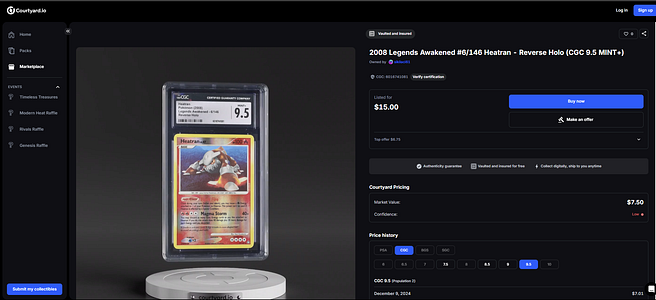
Physical TCG tokenization is a custody-backed RWA primitive, a system where a physical item is placed in secure, insured storage, and a cryptographically verifiable on-chain token is minted as proof of ownership.
The token is the card. Not a representation of it. Not a receipt.
The token.
When you hold the NFT, you hold the card.
When you sell the NFT, you transfer ownership of the physical card without it ever leaving the vault.
When you want the physical item back, you burn or redeem the token and trigger a shipping workflow.
Trading cards are the grandfather of NFTs. NFTs are trading cards on steroids.”
— Nicolas le Jeune, Courtyard Co-founder
Three things make this different from every other NFT product:
1:1 physical backing — every token is tied to a real, graded, stored item
Instant global liquidity — cards trade 24/7 without shipping risk or fraud
Provenance on-chain — full ownership history, verifiable by anyone
Why TCG Cards Specifically?
Cards are the ideal RWA bootstrap asset. Here’s why:
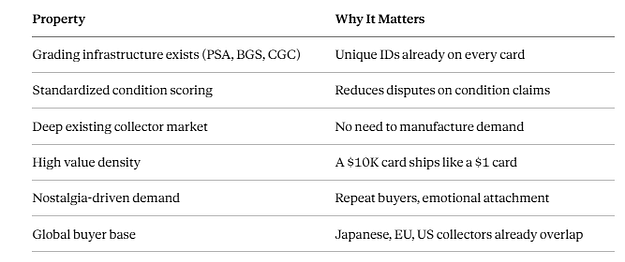
Why TCG Cards Specifically?
The $400B global collectibles market of which TCGs are a massive slice has never had a proper liquidity layer. Physical cards are illiquid by default.
Tokenization fixes the infrastructure, not the asset class.
How courtyard.io Works Internally ?
This is the part most write-ups skip. Let’s go layer by layer.
Layer 1: Physical Custody
Before a single line of code runs, you need a vault partner.
Courtyard uses Brink’s, one of the world’s largest secure logistics companies. Every card sent to Courtyard is:
Authenticated for condition and grade
Photographed with its unique PSA/BGS serial number visible
Stored in a climate-controlled, insured vault facility
Assigned an internal inventory ID
The vault partner isn’t optional infrastructure. It’s the trust anchor for the entire system. Without provably secure custody, the NFT is meaningless.
What you need in a vault partner:
Insurance coverage (minimum $1M, ideally per-item)
Professional grading verification capabilities
Documented chain of custody
Redemption/shipping workflow for token burns
Layer 2: The Fingerprint System
Every vaulted item gets a human-readable fingerprint — a unique string that describes the exact physical item stored.
Here’s what a real Courtyard fingerprint looks like:
Graded Pokemon TCG | PSA 23303316 | 1999 Pokemon Base Set Shadowless
1st Edition Red Cheeks Pikachu #58 | PSA 9 MINT
This fingerprint combines:
Asset category
Grading agency + unique serial number
Full item description
Condition grade
The fingerprint is both unique and human-readable, where anyone can verify what physical item it refers to.
Layer 3: Proof of Integrity — The Core Cryptographic Primitive
This is the piece most builders miss entirely.
Courtyard encodes the fingerprint using keccak256 — the same hashing function used across the Ethereum ecosystem. They also add a salt value:
function generateProofOfIntegrity(
    string memory fingerprint,
    uint256 salt
) public pure returns (bytes32) {
    return keccak256(abi.encodePacked(fingerprint, salt));
}
The output is a 64-character hex string:
0x0b58386d08014f001c1a37ca6b11afd2f3f3e3a578e69a8ed7e7acf68103258eWhy this matters:
Change a single character in the fingerprint → completely different hash
The hash is used as the token ID of the NFT
Token IDs on-chain are immutable once minted
Therefore: the physical item’s identity is cryptographically locked to the token, forever
Why the salt?
For mystery drops and sealed pack reveals Courtyard can publish the Proof of Integrity before revealing what’s inside. The salt prevents reverse-engineering the fingerprint from the hash.
When the pack is opened, the salt is revealed and the fingerprint becomes verifiable.
This one primitive unlocks:
Tamper-proof NFT identity
Sealed pack mechanics
Blind auction support
Metadata integrity verification
If the metadata is altered after mint, the Proof of Integrity will invalidate the token — provably, on-chain, forever.
Layer 4: Smart Contract Architecture
Three contracts. One clean separation of concerns.
1. The Registry Contract
Think of this as the master ledger for a brand or platform.
Single contract, multiple asset types
Every NFT minted under a brand points back here
Handles ERC-721 standard
Can be shared across multiple drops
When you onboard a card brand or IP partner, they get their own registry. They can manage their own appearance on secondary markets (OpenSea, Tensor, etc.) while you control the underlying minting logic.
2. Minting Contracts
A registry can have multiple minting contracts — one per drop, campaign, or product line.
Each minting contract can handle:
Presale / public sale windows
Wallet-level mint limits
Allowlist gating
Permissioned minting via oracle approval signature
The oracle-based minting is the critical path for physical-backed assets:
Backend generates tokenization request
→ Passes to smart contract as approval signature
→ Contract validates signature before mint
→ NFT mints with Proof of Integrity as token ID
→ 1:1 backing guaranteed at contract level
No signature = no mint.
This is how you guarantee every NFT is physically backed.
3. The Backend Oracle
This is the centralized layer and it’s unavoidable in current implementations.
The backend:
Manages physical inventory state
Generates tokenization requests
Issues approval signatures to the minting contract
Handles redemption requests and triggers vault shipping
Maintains metadata (item photos, 3D renders, condition details)
The honest tradeoff:
Current implementations like Courtyard are partially centralized.
The backend controls which items get minted, holds the salt values, and manages metadata.
The Proof of Integrity makes the token identity tamper-proof, but pre-mint the process is oracle-dependent.
This is a known architectural limitation and an active area of improvement for anyone building in this space.
The path toward full trustlessness requires:
Public commitment of Proof of Integrity hashes pre-mint (Merkle root on-chain)
Decentralized metadata storage (IPFS, Arweave)
Multi-sig or DAO-controlled vault operations
Most current protocols haven’t solved this fully. It’s a genuine moat for builders who do.
The Market Gap that you are not seeing?
Here’s the current protocol landscape:
Press enter or click to view image in full size
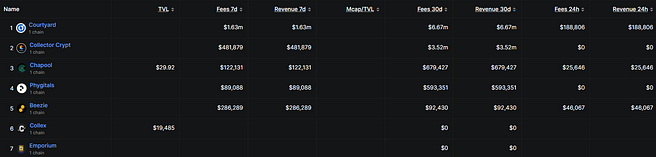
Notice what’s missing: Arbitrum. Avalanche. Sui. Aptos.
Every one of these chains has:
Active NFT marketplace infrastructure
Low transaction costs
Existing collector communities
Developer tooling for ERC-721 equivalents
Fiat on-ramps via exchanges and wallets
None of them have a functioning physical TCG tokenization product.
The product-market fit is proven on Polygon. Courtyard alone was responsible for over 90% of Polygon’s total NFT volume at peak.
That’s not a coincidence, it’s a category with monopoly dynamics on each chain it reaches first.
Enjoying this breakdown?
I share insights like this regularly — deep dives, operator lessons, and things most crypto blogs won’t tell you.
The Right Approach to Building This on a New Chain
Step 1: Choose Your Chain With Intent
Don’t just pick the cheapest chain. Pick the chain with the right collector overlap.
Solana → Already has strong NFT culture (Magic Eden), low fees, fast finality. Best for high-frequency card trading.
Base → Coinbase distribution, fiat-native users, credit card onboarding is native. Best for collector onboarding from Web2.
Arbitrum → ETH-native users, strong DeFi overlap for card-backed lending later.
Avalanche → Subnet flexibility, ideal for building a custom chain scoped to collectibles.
Chain choice should be driven by where your collector base already lives — not where gas fees are lowest.
Step 2: Build the Vault First, Smart Contracts Second
Most builders do this backwards.
Your vault infrastructure is your product differentiation. The smart contract is table stakes.
Vault checklist:
Vault partner with insurance + chain of custody docs
Intake workflow (submission → grading verification → photographing → inventory logging)
Storage protocol (climate control, per-item tracking)
Redemption workflow (token burn → identity verification → shipping)
SLA for each workflow step
Collectors will forgive a rough UI. They will not forgive losing a card or a redemption taking 3 weeks.
Step 3: Implement Proof of Integrity (Don’t Skip This)
On EVM chains, this is a direct port. keccak256 is native to Solidity.
On non-EVM chains:
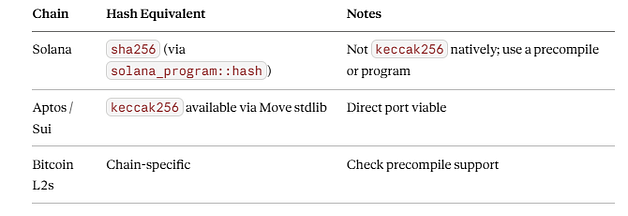
The data model stays the same:
fingerprint = [asset_category] + [grader_id] + [description] + [grade]
proof_of_integrity = hash(fingerprint + salt)
token_id = proof_of_integrity (as uint256 equivalent)
This is your tamper-proof backbone. Don’t ship without it.
Step 4: The Three Metadata Layers
Every NFT needs three distinct metadata layers:
IRL Photo — timestamped image showing unique ID visible on the physical item
3D Render — high-quality digital presentation for marketplace display
On-chain Attributes — grade, grader, set, year, card number, PSA serial
Store IRL photos and 3D renders on IPFS or Arweave. Centralized metadata hosting is a liability, as it’s a single point of failure and an attack surface for the tamper-proof guarantee.
Step 5: Fiat Onboarding Is Non-Negotiable
Courtyard solved this by integrating thirdweb’s NFT Checkout for credit card payments.
The collector base for physical cards is not crypto-native. They’re Pokémon collectors, sports card investors, vintage MTG traders. Most of them don’t have a Web3 wallet. Most of them don’t want one.
Your onboarding stack needs:
Credit card → NFT purchase (no wallet required at entry)
Email/social login with embedded wallet
Gasless transactions (sponsor gas on behalf of the user)
Clear redemption flow with shipping tracking they recognize
If your product requires a MetaMask install as step one, you’ve already lost 80% of your market.
Step 6: Marketplace Architecture
Build or integrate with an existing marketplace. Two paths:
Build Your Own
Full control over UX, fees, discovery features
Higher dev cost
Can build “bid on any item even if not listed” (a Courtyard differentiator)
Integrate with Existing Marketplaces
Tensor (Solana), OpenSea/Blur (EVM), Magic Eden (multi-chain)
Immediate liquidity surface
Faster to market
Less control over user experience
Recommended: Build your own primary marketplace, list on existing aggregators simultaneously. You own the relationship with the collector; aggregators own the liquidity depth.
The Revenue Model We Care
Five clean revenue lines for a physical TCG platform:
Submission fees — charge when a card is vaulted (Courtyard offered this free initially as a growth lever)
Vault/storage fees — monthly or annual per-item custody fee
Transaction fees — percentage of each marketplace sale (typically 2–5%)
Withdrawal/redemption fees — for physical delivery out of vault
Creator royalties — 1% on secondary sales, passed back to the original submitter
The vault and transaction fees are the durable revenue. Submission and redemption are volume-lever tools you can discount or free to drive behavior at different stages.
What Separates Protocols That Scale From Ones That Stall
The builders who fail in this space typically make the same three mistakes:
Mistake 1: Treating the vault as logistics instead of product
Your vault SLA is your core user promise. Treat it like a product with uptime metrics, not a backend vendor relationship.
Mistake 2: Launching without fiat rails
Physical card collectors are Web2 by default. Every extra step in your onboarding is a 30% drop-off. Fiat-first is not optional.
Mistake 3: Ignoring the collector community
The highest-value users in this space are deep in Discord servers, Reddit communities, and grading forums. They already have strong opinions about authenticity and provenance. Get them involved pre-launch. Their trust is your distribution.
Conclusion
Physical TCG tokenization is one of the most quietly validated opportunities in Web3 right now.
The mechanism is proven.
The demand is real.
The market is enormous.
And the distribution problem is uniquely solvable because graded card collectors already understand the concept of provenance, already pay for secure storage, and already trade globally at scale.
What they don’t have is liquidity. You can give them that.
The Proof of Integrity primitive, registry contract, oracle-gated minting, and custody-backed vault stack are all buildable today. Courtyard built the playbook on Polygon. Every other chain is a blank canvas.
The builders who move first on Solana, Base, Arbitrum, or any other chain with an active collector base will own that market for years. The infrastructure moat compounds with each card vaulted.
The only question is whether you’re the one who builds it.
If you want to build a product like this, get in touch with me.
Book a call with me today | Message me over TG
TL;DR — Key Takeaways
Physical TCG tokenization bridges the $400B collectibles market with blockchain liquidity — and it’s only live on ~4 chains
The core primitive is Proof of Integrity: a
keccak256hash of a unique item fingerprint, used as the NFT's immutable token IDArchitecture has three layers: vault custody → backend oracle → smart contract registry + minting contracts
The oracle signs every mint, guaranteeing 1:1 physical backing at the contract level
Sui, Aptos, Arbitrum, Cosmos, Avalanche and others have no functional physical TCG product — first-mover captures monopoly-level volume dynamics
The right build order: vault partner → PoI system → registry contract → marketplace → fiat onboarding
Fiat rails and embedded wallets are non-negotiable — the collector base is Web2 by default
The durable revenue model is vault fees + transaction fees + royalties — not speculation on card prices
Frequently Asked Questions
What blockchain is best for physical TCG tokenization?
There’s no universal answer, as it depends on your collector base. Polygon has proven demand and existing protocols. Solana offers low fees and a strong NFT native community. Base gives you Coinbase’s fiat onboarding infrastructure. Pick the chain where your target collectors already are.
How do you ensure the physical card is actually in the vault?
Through the Proof of Integrity system, which is a vault operator photographs the physical item with its unique grading serial number visible, creates a cryptographic hash of the item’s full description, and uses that hash as the immutable NFT token ID. Any attempt to swap the physical item breaks the cryptographic link. The honest limitation is the oracle that generates this is still largely centralized in current implementations.
What happens if the vault company goes bankrupt or loses a card?
This is the critical custodial risk in the model. Established protocols use Brink’s or equivalent globally insured vault operators. Per-item insurance coverage, documented chain of custody, and multi-party custodial arrangements reduce but don’t eliminate this risk. It’s the core trust assumption every user is making.
Can I build this on Solana without keccak256?
Yes. Solana doesn't support keccak256 natively in its core programs, but it's available via precompiles. Alternatively, you can use SHA-256 (native to solana_program::hash) and maintain the same fingerprinting logic. The key property deterministic uniqueness with single-character sensitivity which is preserved with any strong cryptographic hash function.
How do mystery pack drops work technically?
The vault operator generates a Proof of Integrity for each card using a random salt value but only publishes the hash, not the underlying fingerprint or salt. Buyers purchase packs without knowing the exact cards. On "reveal," the salt is made public, allowing anyone to verify that keccak256(fingerprint + salt) == published_hash. This proves the item inside was committed before purchase, making the drop provably fair.
How do I compete with Courtyard on Polygon?
Don’t. Competing on the same chain against a well-capitalized first mover with Brink’s as a partner and YC backing is a poor ROI. The better play is to pick an untapped chain with an active collector base and be the dominant infrastructure there. The market is large enough and chain communities loyal enough — that cross-chain fragmentation is a feature, not a bug, for the second wave of builders.
Need a custom Web3 platform for your project?
We design, build and deploy custom audited staking portals, claim utilities, prediction markets, and crypto casinos tailored to your branding. Fully operational in 2–4 weeks.


